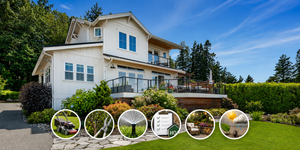
Westwood is one of those League City neighborhoods where people arrive planning to stay five years and hand the keys over twenty-two years later. Traditional floor plans, mature trees, strong school ties, and a location that predates most of the master-planned inventory west of I-45. If you are searching for the best realtor to sell your house in Westwood, you are almost certainly a long-term owner, and that changes the entire strategy. Selling a home you bought in a different decade is a different job than flipping a five-year-old build, and most listing presentations never acknowledge it.
Selling a Long-Held Home Is a Different Transaction
The equity is the easy part. What complicates a long-tenure sale is that your house has aged into a comp set full of newer inventory with finishes buyers see on every builder website. The winning move is almost never a full renovation.
| Your situation | What buyers actually react to | What to skip |
|---|---|---|
| Original kitchen, sound layout | Paint, hardware, lighting, and counters | A full gut remodel you will not recoup |
| Aging roof or HVAC | A documented recent replacement or a credit | Replacing both preemptively without pricing advice |
| Dated bathrooms | Fixtures, mirrors, and grout, cleanly done | Moving plumbing |
| Mature landscaping | Trimmed canopy, clean edges, visible front door | Removing healthy mature trees |
| Twenty-plus years of belongings | Ruthless decluttering and a storage unit | Staging every room you cleared out |
The single highest-return decision in a long-tenure League City sale is usually not a renovation at all. It is pre-listing inspection. Spend a few hundred dollars to learn what a buyer's inspector will find, then choose which items you fix and which you disclose and price for. Sellers who skip this step negotiate blind in the option period, and the buyer's leverage is at its absolute maximum in exactly that window.
The Westwood Position Inside the League City Market
Westwood sits in the older, more established core of League City rather than the newer master-planned corridors, and it competes on different terms than they do. That is a strength in the right hands.
| Westwood strength | Why it converts a buyer | How to market it |
|---|---|---|
| Established Clear Creek ISD ties | School zone stability is a top relocation filter | Confirm and state the zoned campuses for your exact address |
| Mature tree canopy | Newer sections cannot manufacture thirty-year trees | Shoot the exterior in morning light, not midday |
| Traditional lot sizes | Yard space beats a builder's 50-foot homesite for family buyers | Photograph and measure the usable back yard |
| Central League City location | Shorter drive to I-45, SH 3, Clear Lake, and the NASA employment corridor | Publish real drive times, not vague proximity claims |
| Lower or simpler HOA structure | A real monthly cost difference against amenity-heavy plans | Put the annual figure in the listing, buyers screen for it |
| Low turnover | Scarcity is a genuine argument when few homes come up | Lead with it in the first line of the description |
Current League City price and days-on-market figures move constantly and vary block to block within Westwood, so we do not quote a neighborhood average here. We will build you a live comp set from active, pending, and sold data for your specific street and floor plan before we recommend a list price. Any agent who gives you a number before walking your house is guessing, and a guess that comes in high costs you the first three weeks of buyer attention, which are the only weeks that reliably produce a premium.
What Sellers Underestimate in an Established Neighborhood
| Factor | Why it matters in Westwood specifically | What to do about it |
|---|---|---|
| Pricing against newer inventory | Buyers cross-shop your home against builder product with warranties | Price and market on land, trees, and location, not on finish parity |
| Deferred maintenance stacking | Twenty years of small items read as one big project to a buyer | Fix the visible cluster, disclose the rest, price accordingly |
| Appraisal in a mixed-age pocket | Appraisers may reach for comps that are not truly comparable | Provide the appraiser a documented comp packet at the inspection |
| Survey age | An old survey plus added structures can stall closing | Locate your survey now, before you are under contract |
| Photography timing | Canopy shade makes midday photos read dark and dated | Schedule the shoot for morning, and reshoot after landscaping |
| Sequencing your next purchase | Moving up or downsizing while inventory is tight | Line up your contingency plan before you go active, not after |
The most common preventable delay in an established-neighborhood closing is the survey. If you have added a pool, a deck, a shed, or a fence since you bought, your existing survey may not reflect it, and the title company will want that resolved. Finding out during the option period is inconvenient. Finding out ten days before closing is expensive.
List Now, Improve First, or Wait: The Honest Tradeoff
| Option | Upside | Trade-Off |
|---|---|---|
| List as-is with strategic cosmetics | Fastest path to market, lowest cash outlay, and you capture the current buyer pool. | You will price to the condition, and some buyers will filter you out on photos alone. |
| Complete targeted improvements first | Paint, lighting, counters, and landscaping typically return more than they cost in a mature neighborhood. | Three to six weeks of delay and real coordination effort while you still live there. |
| Full renovation before listing | You compete directly with newer inventory on finish level. | Rarely recouped in full, and buyer taste risk is entirely yours. |
| Wait for a stronger season | More buyer traffic in peak months can support pricing. | Carrying costs continue, and low-turnover neighborhoods reward being the only good listing more than being one of six. |
That last point deserves emphasis. In a neighborhood where few homes come available, being the only well-prepared listing in a slow month often beats being the fourth listing in a busy one.
Why The Mandie McMillan Team, Client for Life Rather Than One Closing
Selling a home you have lived in for two decades is not a transaction you want handled by someone learning the neighborhood. Mandie McMillan was born and raised in La Marque in 1976, has spent 50 years in Galveston County and the Bay Area, and has lived in her own League City home for 18 years. She has been licensed since 2000, 26 years of listings across every market condition this area has produced, and she holds the Seller Representative Specialist designation, which is the credential built specifically for this side of the table.
In 2025 The Mandie McMillan Team closed 75 sides and $22,127,458 in production volume, with Mandie personally closing 30 sides and $11,676,748. Across just 6 producing agents that works out to roughly 12.5 closed sides and about $3.7 million per agent, which means your listing gets an experienced agent who knows your file rather than a number in a forty-agent funnel. Mandie is a RE/MAX International Hall of Fame inductee and a repeat RE/MAX Chairman's Club and Platinum Club honoree, and the team ranks among the Top 250 RE/MAX teams in Texas. She also served as 2017 President of the Bay Area chapter of the Women's Council of Realtors and 2018 Texas District Vice President.
Plenty of good listing agents work League City. Some are strongest in new construction and builder inventory, some specialize in the waterfront and Clear Lake corridor, and others focus on relocation contracts tied to the medical and aerospace employers. Interview more than one and pick the specialty that matches your house. If your house is a long-held Westwood home and you want an advisor who will still be your first call when you sell the next one, that is what Client for Life means.
Thinking about selling in Westwood? Contact The Mandie McMillan Team at RE/MAX Coastal for a walk-through and a real comp set for your street. No pressure, no guessed number.